

From: $200.10
Brand New! Bridge the gap between cutting-edge research and clinically relevant knowledge. Written by researcher and longevity expert Dr. Valter Longo, you’ll learn how to support your patients by integrating targeted metabolic interventions into cancer care for optimal results. Features:
This course is CDR-approved for 18 CPEUs for RD/RDNs and DTR/NDTRs, and CBDCE-approved for 18 CEUs for CDCESs. Please note course expiration date below.
CPEU/CEU: 18
Course Expiration Date: 3/31/2029. You have until that date to complete your CPEU Evaluation or Webinar Feedback Survey for this course.
Learn more about course expiration dates.
The CDR Activity Number for this course is: 192309
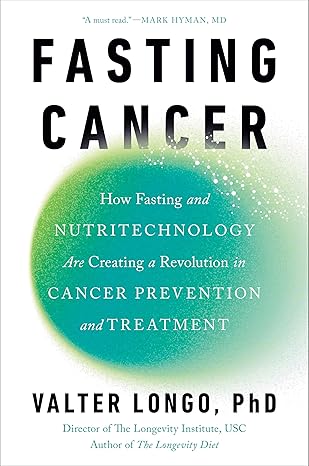
Fasting Cancer: How Fasting and Nutritechnology are Creating a Revolution in Cancer Prevention and Treatment Book + CE Evaluation (Exam)
Course Type: 741—Enduring Activity
Includes CE Evaluation/Reporting Form: You will submit it online and receive your CE Certificate immediately.
Suggested Learning Level: 2
Learn how to leverage cutting-edge nutrition science and fasting physiology as adjunctive tools in cancer care. Understand targeted metabolic interventions that target the metabolic vulnerabilities of cancer cells. Get the most up-to-date research on fasting and fasting-mimicking diets and their application in immunity, tumor progression, and modern cancer care. Written by researcher and longevity expert Dr. Valter Longo, this book critically evaluates emerging nutritechnology research.
Features:
Support your oncology patients with nutrition strategies based on emerging research. Fasting Cancer: How Fasting and Nutritechnology are Creating a Revolution in Cancer Prevention and Treatment CE course translates research into clinical application .
Published 2025. 320 pages.
18 CPEU CE Course. See the PIs tab for suggested Performance Indicators.
Reading the book Fasting Cancer: How Fasting and Nutritechnology are Creating a Revolution in Cancer Prevention and Treatment and successfully passing the CE exam awards 18 CPEUs in accordance with the Commission on Dietetic Registration’s CPEU Prior Approval Program.
Discover Skelly Skills’ other functional and integrative CE courses.
Learn more about author Valter Longo, PhD.
CPEU/CEU: 18
NOTE: Course Expiration Date: 3/31/2029. You have until that date to complete your CPEU Evaluation or Webinar Feedback Survey for this course.
1.1.1 Participates and documents engagement in professional development activities to maintain and enhance competence.
1.1.2 Pursues and embraces opportunities to advance practice.
1.1.5 Integrates new knowledge and skills into practice.
1.1.6 Recognizes and exercises professional judgment within the limits of individual qualifications.
3.2.3 Delivers accurate and credible messaging.
5.1.1 Demonstrates effective problem solving and professional judgment to address needs.
5.1.2 Interprets and integrates evidence-based research and literature in decision-making.
5.2.1 Identifies potential or existing opportunities and challenges.
5.2.4 Investigates alternative explanations for deficits or challenges and considers alternative methods and provides justification for
selected option(s).
5.2.5 Analyzes and synthesizes information and identifies new information, patterns and findings.
5.2.6 Integrates relevant information with previous learning, experience, professional knowledge, and current practice models.
7.1.2 Uses established benchmarking to inform practice.
7.2.3 Analyzes and interprets data to form valid conclusions and to make recommendations.
7.8.1 Masters and maintains current and evidence-based knowledge within subject areas.
8.4.7 Uses established benchmarking and best practices to inform practice.
9.1.1 Interprets and applies evidence-based literature and standards for determining nutritional needs of target audiences.
9.1.2 Integrates knowledge of biological, physical, and social sciences with knowledge of food and nutrition to make decisions related to nutrition care.
9.1.4 Integrates knowledge of macro- and micronutrients for digestion, absorption and metabolism throughout the lifespan in practice.
9.1.5 Demonstrates knowledge of nutrient requirements throughout the lifespan, and their role in health promotion and disease prevention.
9.2.1 Engages in educational activities to maintain knowledge and to obtain new knowledge of diseases and clinical conditions.
9.2.2 Differentiates between outdated and current evidence-based practice related to the management of diseases and clinical conditions.
9.2.3 Analyzes new information and how it impacts medical nutrition therapy.
9.2.4 Integrates new knowledge of disease states and clinical conditions into practice.
9.3.4 Assesses clients’ emotions toward nutrition-related statements or phenomenon, body image/preoccupation with food and weight, and readiness to change nutrition-related behaviors.
9.4.1 Gains an understanding of integrative and functional medicine models and interventions and how these models and interventions are applied to nutrition and dietetics service.
9.4.2 Critically evaluates the credibility of integrative and functional medicine research and literature, using evidence-based criteria, to respond to inquiries and to determine the appropriateness of incorporating these interventions into nutrition care plans.
9.4.3 Identifies research gaps to support conscious decision-making.
9.4.4 Identifies safety issues, risks, efficacies, benefits and limitations of interventions.
9.5.1 Plans and designs nutritionally sound meals, menus and meal plans that promote health and disease management, and meet client needs.
10.1.3 Identifies and analyzes factors that influence change in behaviors.
10.2.1 Evaluates learning needs of individuals and target groups.
10.3.1 Critically reviews and selects materials from credible sources to support the development of diet and nutrition education resources.
10.4.2 Assesses and identifies the current knowledge, skills, and cultural influences of populations.
10.6.1 Assesses client/patient nutritional needs and appropriateness of the counseling.
10.6.6 Determines client/patient expectations and aspirations and manages situations wherein these expectations cannot be met.
11.2.1 Selects valid and reliable tools to conduct comprehensive nutrition assessments.
11.2.2 Interviews clients/patients and reviews health records to collect information about medical history and food and nutrition intake.
11.2.3 Collects information related to client/patient use of medications, dietary supplements and integrative and functional medicines to identify potential adverse drug and nutrient interaction.
11.2.8 Recommends biochemical tests and reviews results to support diagnoses and plans of care.
11.2.9 Orders biochemical tests and reviews results to support diagnoses and plans of care.
11.2.10 Gathers and evaluates information related to behaviors, beliefs, knowledge, and client/patient attitudes that influence nutrition and health.
11.3.1 Establishes goals and desired outcomes in collaboration with clients/patients.
11.3.2 Determines factors impacting client/patient progress in meeting goals and adjusts nutrition care plans accordingly.
11.3.3 Prioritizes specific nutrition problems to inform nutrition care plans and processes.
11.3.4 Selects interventions intended to resolve or improve nutrition diagnoses.
11.3.5 Establishes nutrition care plans, defining the time, frequency, and duration of interventions.
11.3.6 Develops nutrition prescriptions to communicate clients’/patients’ customized diet and nutrition needs.
11.3.9 Leads the implementation of nutrition interventions in collaboration with clients/patients and the interprofessional team.
11.4.3 Identifies potential food-nutrient drug interactions based on physiological responses to pharmacological agents and takes appropriate action.
11.4.6 Monitors responses and effects of nutrition-related drugs and takes required action to make modifications or adjustments to treatment plans.
11.5.1 Reevaluates and adjusts plans of care to support client/patient health goals.
11.5.2 Monitors and identifies factors affecting client/patient progress in meeting goals.
11.5.3 Adjusts interventions based on client/patient progress in meeting established goals.
11.5.4 Establishes new goals and nutrition care plans when original or interim goals are met.
13.2.1 Identifies determinants of health and influences on population health status.
13.2.2 Identifies and reviews evidence-based literature to create programs and to justify needs and actions.
13.3.6 Prioritizes goals and objectives based on health problems and health problem changeability.
Only logged in customers who have purchased this product may leave a review.
CPEU/CEU: 35
CPEU/CEU: 25
CPEU/CEU: 18
CPEU/CEU: 18

Skelly Skills offers two types of Continuing Education (CE), also known as Continuing Professional Development (CPD). The two types of CDR-approved CE we offer are:
For each of these types of CE, we offer Continuing Professional Education Units (CPEUs — also called CEUs, clock hours, or CPD hours).
Our prior approved enduring CE courses all include a CE exam. This is important for some of you because you *may* be limited by the number of prior approved enduring (aka self-study) hours you can accumulate. For each course, you will need to complete the CE exam through our online testing system. It’s easy and you’ll get your CE Certificate of Completion as soon as you pass the course (or complete the Feedback Survey, in the case of our one-hour on-demand CE webinars).
Our live CE webinars include a Feedback Survey. Within 24 hours of the live webinar, we will send an email with the Assessment ID and Key ID to complete the Feedback Survey through our testing system. Once you complete that, you’ll immediately be able to print and/or download your CE Certificate of Completion (it will also be emailed to you).
Step 1: Visit Skelly Skills and choose the topic and book or other course type you want to study. The number of CPEUs/CEUs/CPD hours are shown on each product page. Note to international customers: You can change the display currency using the icons on the right of the page.
Step 2: Pay online—you’ll get virtual courses immediately or else you’ll receive the book in the mail along with the CE exam booklet (we call this a ‘CE Evaluation’). Note: for books that we publish in-house, we include the CE exam and testing info in the back of the book, not as a separate booklet.)
Step 3: Study the course content. Once you have finished, complete the online exam at our testing site using the Assessment ID and Key ID (password) provided to you in the CE Evaluation, or on the course webpage if you are completing an on-demand webinar or online course.
That’s it! Once you have passed your exam, you’ll receive a PDF certificate of completion which includes the number of CPEUs/CEUs/CPD hours.

Purchase your webinar and receive a link to the webinar immediately.
Watch your webinar and then submit the CE Feedback Survey form by the course expiration date.
After submitting your CE Feedback Survey, you will be able to download your CPEU/CEU certificate as a pdf and keep for your records.

We use cookies to ensure you get the best experience. By using our website or clicking "accept", you consent to cookies.
Reviews
There are no reviews yet.