CPEU/CEU: 35
Course Expiration Date: 12/11/2026. You have until that date to complete your CPEU Evaluation or Webinar Feedback Survey for this course.
How does testing work?
Learn more about course expiration dates.
The CDR Activity Number for this course is: 180285
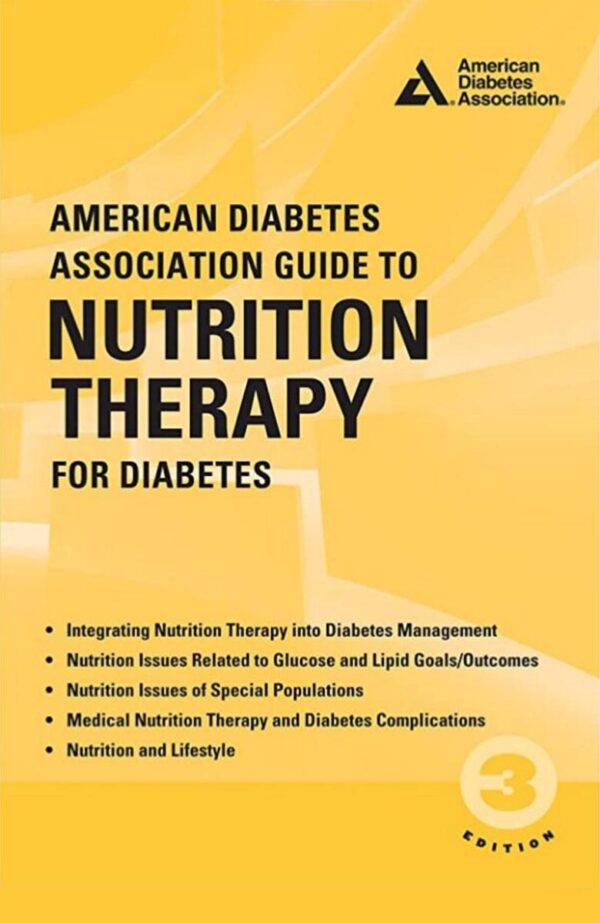
American Diabetes Association (ADA) Guide to Nutrition Therapy for Diabetes, Third Edition CE Course
Course Type: 720—Preapproved Self-Study Materials, Printed.
Includes CE Evaluation/Reporting Form: You will submit it online and receive your CE Certificate immediately.
Suggested Learning Level: 2
This new edition has been completely revised to provide evidence-based diabetes information from the American Diabetes Association (ADA) and the latest clinical guidelines for approaching and managing all diabetes-related scenarios. Successfully implement medical nutrition therapy (MNT) with effective and evidence-based approaches in your diabetes practice. Confidently deliver the most up-to-date care to both inpatient and outpatient patients and clients with diabetes.
Features:
- Guidelines for integrating nutrition therapy with CGM, pump, other insulin regimens, and oral meds
- Comprehensive macro- and micronutrient and eating guidelines for Type 1 and Type 2
- Nutrition and counseling recommendations for all aspects of the diabetes lifecycle: children, teens, pregnancy and postpartum, and older adults.
- MNT for a variety of clinical scenarios, including sick days, management of comorbidities like hypertension, cardiovascular and renal disease, hospitalized patients, long-term care, eating disorders, celiac disease, and much more.
- Management of special populations, like those with prediabetes and athletes with diabetes
- The management of diabetes complications, such as Celiac disease and eating disorders
- Counseling and education considerations, including low-literacy and numeracy, community-based diabetes prevention programs, and much more!
Stay current on best-practice nutrition therapy and interventions for diabetes management with this comprehensive resource. Improve outcomes for your patients and clients with diabetes with the latest diabetes evidence-based guidelines from the American Diabetes Association (ADA). American Diabetes Association (ADA) Guide to Nutrition Therapy for Diabetes, Third Edition CE will guide your diabetes practice!
Published 2017. 628 pages. 35 CPEU CE Course. See the PIs tab for suggested Performance Indicators.
Discover Skelly Skills’ other diabetes CE courses.
Learn more about the American Diabetes Association.
CPEU/CEU: 35
NOTE: Course Expiration Date: 12/11/2026. You have until that date to complete your CPEU Evaluation or Webinar Feedback Survey for this course.
9.2.1 Assesses the learning needs of the individual or target group.
9.4.6 Uses socially and culturally appropriate strategies in order to respect diverse cultures and values.
9.1.3 Identifies and analyzes factors that influence behavioral change.
9.4.2 Selects and uses appropriate content and teaching methods to meet individual and group needs.
8.3.6 Keeps abreast of current nutrition and dietetics knowledge and trends.
9.1.2 Identifies and works to minimize and overcome barriers to learning.
9.1.4 Evaluates factors that influence the learning process and skill building.
9.2.3 Applies educational theories and uses assessment results for the planning process and development of materials and teaching.
9.3.2 Develops and/or selects a variety of learning activities based on a plan of action and outcomes, and the needs of the individual, group, community and population.
9.4.1 Assesses current knowledge and skills of the individual, group, community and population.
9.4.4 Adjusts education plan to meet the needs of the individual, group and population.
9.4.5 Implements an individualized teaching plan in order to promote, maintain and enhance nutritional health and learning.
9.4.8 Evaluate the impact of the individual’s learning and new knowledge and skills.
9.2.4 Collaborates with learner(s) and colleagues to formulate specific, measurable and attainable objectives and goals.
1.3.1 Applies strategies that engage the customer in a collaborative approach.
1.3.3 Builds rapport and trust within the relationship while respecting boundaries.
1.3.6 Develops and implements culturally appropriate strategies when delivering service.
1.3.8 Initiates collective efforts with others to implement resources to support culturally diverse customers.
1.3.9 Recognizes and incorporates knowledge of cultural and/or religious foods, practices and preparation.
12.4.2 Collaborates with community partners to implement programs based on the assessed needs, values, beliefs, limitations and strengths of the population.
1.3.5 Identifies and respects economic and socio-cultural factors when determining the goals and wants of the customer.
1.3.7 Recognizes the limits of his/her cultural knowledge, skill and abilities; asks for help when the need is beyond the personal sphere of competence.
2.1.5 Observe non-verbal cues and respond appropriately.
3.3.1 Educates the customer on the availability of nutrition services.
2.1.1 Assesses the communication needs of the individual, customer or population.
2.1.7 Delivers information and opinions in a respectful and professional manner.
Only logged in customers who have purchased this product may leave a review.










R. W., long-term care dietitian –
The details are great and very useful in the clinical setting.
A. C., Registered Dietitian –
I liked the detailed and in-depth explanations of each area of diabetes management.
E. G., clinical staff dietitian –
Very good information and informative.
James S. Stover, MS, RDN, LD, Elizabethtown, KY –
The ADA Guide to Nutrition Therapy for Diabetes provides much information on how to apply and implement diabetes nutrition therapy in most [if not “all”] of the scenarios a diabetes patient/client may face, such as physical exercise regimen, obesity, cardiovascular & cerebrovascular disease, kidney disease, celiac sprue, cystic fibrosis, long-term care, senior citizen diabetes care, sickness & “hospital inpatient” status, pregnancy/gestational diabetes, child/teen diabetes care, etc. This course has also given me further insight into the use of “Carbohydrate-to-Insulin” ratios regarding insulin administration in “Type I” and “Type II-turned-Type I” diabetes patients/clients. In essence, this course has given me more knowledge about the nutritional therapy for diabetes mellitus than what I’d learned in my academic/internship training as a “registered dietitian/nutritionist”. Finally, this course has further opened my eyes to the experiences of the children and teens with diabetes.
Tiffany Brauer,RD, Panama City, FL –
The literature is thorough. It covers the whole spectrum of persons with diabetes. I will use this information in my practice as well as with my recommendations to loved ones, and even myself, thanks to the physical activity chapter. I feel much more confident in myself when speaking to other departments regarding patients with diabetes and their diets.