CPEU/CEU: 45
Course Expiration Date: 9/22/2026. You have until that date to complete your CPEU Evaluation or Webinar Feedback Survey for this course.
How does testing work?
Learn more about course expiration dates.
The CDR Activity Number for this course is: 178719
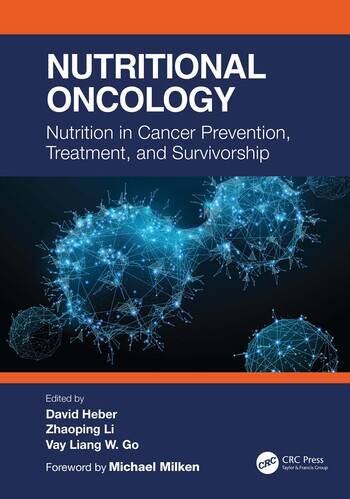
Nutritional Oncology: Nutrition in Cancer Prevention, Treatment, and Survivorship CE Course
Course Type: 720—Preapproved Self-Study Materials, Printed.
Includes CE Evaluation/Reporting Form: You will submit it online and receive your CE Certificate immediately.
Suggested Learning Level: 2
About This Course
Nutrition continues to take a leading role in cancer prevention, treatment, and survivorship. Update your nutritional oncology knowledge with this comprehensive course. Educate yourself on the most up-to-date research and information on nutrition’s role in cancer risk factor reduction, cancer treatment response, and cancer prevention and survivorship. Connect the research to practical application to provide the best care for your clients. This is a core resource for any practitioner working with the oncology population or in cancer prevention. With easily referenced topics broken out into chapters, tables, and figures, it will be a favorite addition to your practice.
Features:
- The role of nutrition in cancer metabolism
- Nutrition’s role in immune function
- The impact of nutrition and diet on cancer risk
- The role of microbiota in cancer progression, treatment, and prevention of relapse
- Complementary medicine treatment modalities and herbal medicine in cancer care
- The history and evolution of the role of nutrition in cancer
- Current research on nutrition, phytonutrients, dietary patterns, and supplements
- Environmental factors and cancer risk
- Factors affecting minority health disparities in nutrition and cancer, and collaborative approaches for improvement
Nutrition can play a starring role in preventing and treating cancer. This well-organized resource covers nutrition for cancer prevention, cancer relapse prevention, treatment, treatment response, and quality of life throughout cancer. Nutritional Oncology: Nutrition in Cancer Prevention, Treatment, and Survivorship CE course is an evidence-based, comprehensive course providing the most up-to-date science on nutrition application in cancer care.
Published 2021. 506 pages. 45 CPEU CE Course. See the PIs tab for suggested Performance Indicators.
Discover Skelly Skills’ other functional and integrative nutrition CE courses.
Learn more about editors David Heber, MD, PhD, Zhaoping Li, MD. PhD, Vay Liang W. Go, MD.
CPEU/CEU: 45
NOTE: Course Expiration Date: 9/22/2026. You have until that date to complete your CPEU Evaluation or Webinar Feedback Survey for this course.
8.1.1 Interprets and applies evidence-based comparative standards for determining nutritional needs.
8.1.2 Applies knowledge of food and nutrition as well as the biological, physical and social sciences in practice.
8.1.3 Integrates knowledge of macronutrients and micronutrients for absorption, digestion and metabolism throughout the life span in practice.
8.1.5 Applies medical nutrition therapy in disease prevention and management.
8.2.2 Applies knowledge of health determinants when planning, developing and implementing services, programs, meal plans and menus.
8.2.4 Imparts knowledge of the importance of physical activity and applies behavior change principles to promote physical activity and decrease inactivity.
8.3.1 Maintains the knowledge and skill to manage a variety of disease states and clinical conditions.
8.3.3 Takes action to address deficiencies to enhance practice.
8.3.5 Keeps abreast of changes in practice and within practice environments that affect the scope of practice.
8.3.6 Keeps abreast of current nutrition and dietetics knowledge and trends.
8.3.7 Integrates new knowledge and skills into practice.
10.2.1 Identifies and selects valid and reliable tools to conduct a comprehensive nutrition assessment.
10.2.4 Integrates foundational dietetics knowledge with critical appraisal of assessment data to diagnose nutrition problems
10.2.5 Develop nutrition prescriptions to communicate required food and nutrient needs.
10.2.7 Prioritizes specific nutrition problem(s).
10.2.8 Establishes the plan of care, directly addressing the nutrition diagnosis in collaboration with the patient in defining the time, frequency and duration of the intervention.
10.2.9 In collaboration with the client and interdisciplinary team (including NDTRs), selects and implements current and evidence-based nutrition interventions and patient education.
10.4.1 Collects information related to the patient’s use of pharmacotherapy and dietary supplements.
10.4.2 Applies knowledge of pharmacotherapy and its effect on nutrient absorption, utilization and metabolism when developing and/or revising the plan of care.
10.4.3 Evaluates, educates and counsels on the interrelationship and impact of pharmacotherapy on nutrient absorption.
10.4.4 Makes recommendations for the appropriate use of vitamin and mineral supplementation in the management of health and disease.
Only logged in customers who have purchased this product may leave a review.







A. E., RD –
It is a very thorough overview of nutrition as it relates to cancer. It provides useful information for practitioners working with patients as well as interesting information about different fields of research.
Debra Dill, RD, Eagleville, PA, Senior Director of Food & Nutrition –
This education was valuable in that it provided an in-depth education into nutrition and cancer, what risk factors contribute to cancer – environmental and genetic, and a look at the many types of cancers and their involvement in nutrition and overall health. It reviewed the science of nutrition and its role in cancer prevention and cancer treatment. I did not have a lot of training in nutrition and cancer and this provided me with great information to use in my life and practice.
Cindi Lockhart, RDN, LD, IFNCP, East Bethel, MN –
This was a very comprehensive training in the nutritional oncology field – for prevention, treatment, and survivorship. All the material was presented in an effectively summarized way with lots of pertinent research to back it up. This is a field of practice I am personally interested in and would like to implement more cancer care into my practice and I feel this course really provided me a comprehensive introduction to do so effectively.
Edy McClure, MS, RD, CDE, CD-N, Southbury, CT –
The most valuable aspect of the self-study was the comprehensive integration of cancer biology, nutrition, and emerging research on the microbiome. Specifically, the sections exploring how the gut microbiota impacts immunotherapy outcomes and cholesterol metabolism in cancer progression offered new insights that directly connect to both current and future clinical practice. Additionally, the discussion of health disparities in cancer care—particularly in minority populations—was eye-opening and emphasized the need for culturally competent interventions.