

From: €161.69
Learn the key role nutrition plays in delivering optimal palliative and terminal care to patients of all ages. This comprehensive resource simplifies a complex topic, providing practical guidelines you can readily apply in your practice. Features:
This course is CDR-approved for 35 CPEUs for RDs/RDNs and DTRs/NDTRs and CBDCE-approved for 35 CEUs for CDCES. Please note course expiration date below.
CPEU/CEU: 35
Course Expiration Date: 4/7/2028. You have until that date to complete your CPEU Evaluation or Webinar Feedback Survey for this course.
Learn more about course expiration dates.
The CDR Activity Number for this course is: 187958
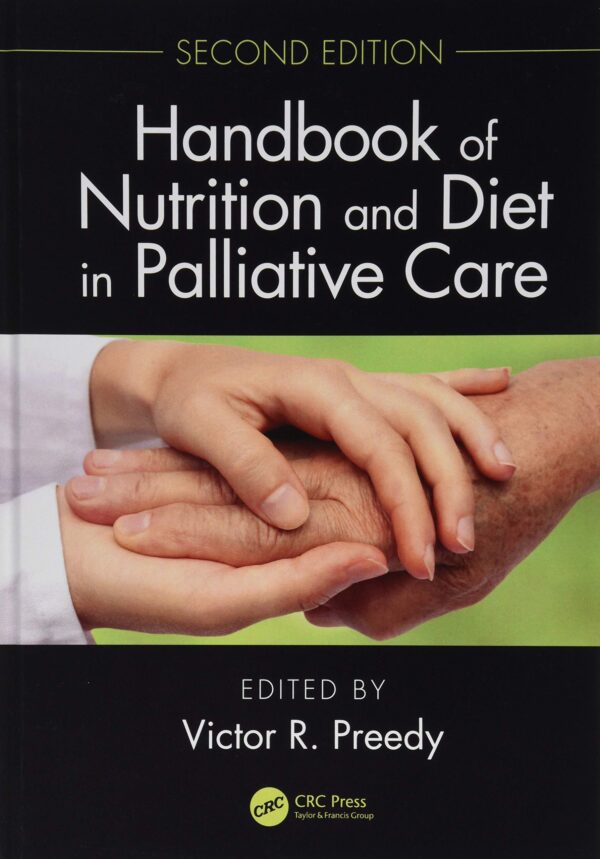
Handbook of Nutrition and Diet in Palliative Care, Second Edition Book + CE Evaluation (Exam)
Course Type: 741—Enduring Activity
Includes CE Evaluation/Reporting Form: You will submit it online and receive your CE Certificate immediately.
Suggested Learning Level: 1
Gain a comprehensive understanding of nutrition and diet in terminal and palliative care. This all-inclusive book guides all aspects of palliative and end-of-life care throughout the lifespan. Learn how to effectively and ethically apply nutrition and diet approaches in palliative care. Increase your knowledge of a variety of palliative care topics spanning from pain management, communication challenges, artificial nutrition and hydration, to religion and culture considerations, and more. This is a valuable resource for any Registered Dietitian Nutritionist working with this population.
Features:
Learn the importance of nutrition in improving the quality of life for your palliative care patients. Understand how to meet the needs of your patients and their family members and caregivers while taking ethics and evidence-based practice into consideration. Handbook of Nutrition and Diet in Palliative Care, Second Edition, is an essential guide for your palliative care practice.
Published 2021. 428 pages.
35 CPEU CE Course: See the PIs tab for suggested Performance Indicators.
Reading the book Handbook of Nutrition and Diet in Palliative Care, Second Edition, and successfully passing the CE exam awards 35 CPEUs in accordance with the Commission on Dietetic Registration’s CPEU Prior Approval Program.
Discover Skelly Skills’ other counseling, education, and communication CE courses.
Learn more about editor Victor R. Preedy.
CPEU/CEU: 35
NOTE: Course Expiration Date: 4/7/2028. You have until that date to complete your CPEU Evaluation or Webinar Feedback Survey for this course.
1.1.1 Participates and documents engagement in professional development activities to maintain and enhance competence.
1.1.2 Pursues and embraces opportunities to advance practice.
1.1.3 Keeps abreast of changes in practice and in the practice environment that affect individual competence and legislative scope of practice.
1.1.5 Integrates new knowledge and skills into practice.
1.1.6 Recognizes and exercises professional judgment within the limits of individual qualifications.
1.1.8 Collaborates with others, seeks counsel, and makes referrals as needed.
1.2 Demonstrates integrity in personal and organizational behaviors and practices.
1.2.2 Keeps abreast of and complies with national, state, and local legislation, regulations, policies, and standards.
1.3 Recognizes and manages situations with ethical implications.
1.3.1 Recognizes actual or potential ethical issues and dilemmas encountered in practice.
1.3.2 Uses an ethical framework to guide decisions.
1.4 Respect client autonomy to make decisions about proposed services.
1.4.1 Communicates risks, benefits, disadvantages, alternatives to, and costs of proposed treatment plans, contracts, or scope of work.
1.5 Recognizes and maintains appropriate relationships and boundaries.
1.6 Adheres to confidentiality and privacy legislation, standards, and policies.
1.7 Applies cultural competence and consideration for social determinants of health to show respect for individuals, groups, and populations.
1.7.1 Recognizes and respects cultural and racial diverse backgrounds to effectively interact and build meaningful relationships with others (e.g., clients, employees, inter- and intra-professional team members, and community and professional groups).
1.7.2 Recognizes the importance of diversity, orientation, social and cultural norms that may have an impact on individuals, groups, and plans of care.
1.7.3 Develops awareness of one’s own personal beliefs and values to inform and reduce biases.
1.7.4 Implements strategies and creates culturally sensitive and diverse resources to support diverse populations.
1.7.5 Applies knowledge of cultural foods, religious traditions, eating patterns, and food and nutrition trends.
1.7.6 Applies knowledge of health determinants when planning, developing and implementing services, programs, interventions, meal plans and menus.
2.1.1 Applies cultural humility and competence, and consideration for social determinants of health in a variety of settings (eg,
healthcare, education, business) to show respect for individuals, groups, and populations.3.1.1 Identifies strengths and opportunities for improvement in self and in others.
2.1.2 Develops awareness of one’s own personal biases, privilege, beliefs, and values to inform understanding of and reduce biases.
2.1.3 Reflects on how personal biases, privilege, and beliefs influence interpretation of evidence and research and changes behavior accordingly.
2.1.4 Applies knowledge of cultural foods, religious traditions, eating patterns and food and nutrition trends when developing nutrition and dietetics services to be comprehensive of all individuals in target population.
2.1.5 Assesses the client’s need for language and interpretive services and takes steps to support access to these services.
2.2.2 Recognizes the importance of differences, orientation, social and cultural norms that may have an impact on individuals, groups and plans of nutrition care, services or education.
2.2.3 Implements strategies to identify or create culturally sensitive resources to support the needs of target population(s) through multiple mediums.
2.2.4 Recognizes benefits and strength of a group’s collective experiences, beliefs, values, skills, and perspectives in the development of programs and resources designed to meet the needs of distinct populations.
2.3.1 Demonstrates dedication towards integrating behaviors that support cultural humility in the delivery of nutrition and dietetics care, services, education, and advocacy.
3.1.1 Assesses the communication needs of individuals, groups, and populations to provide effective communication.
3.1.2 Identifies and addresses barriers to effective communication.
3.2.1 Observes non-verbal and social cues and responds appropriately.
3.2.2 Delivers information and opinions in a respectful and professional manner.
3.3.2 Considers and respects the opinions, creativity, values, beliefs, and perspectives of others.
3.3.5 Collaborates with others when knowledge, skill, or experience are beyond their competence level.
3.3.6 Demonstrates conflict resolution and mediation skills.
3.4.2 Incorporates team members’ knowledge, expertise, and personal skills into team processes.
4.1.2 Fosters a culture in which diversity and cross-team collaboration is valued.
4.1.6 Takes an active role in sharing information and knowledge.
4.2.1 Advocates for and influences local, federal, and global nutrition and health policy to promote the health and well-being of individuals, communities, and populations.
4.2.2 Engages in legislative and regulatory activities that address community, population, and global health to promote change.
4.2.3 Interprets legal terminology used to establish nutrition regulations and policies to support knowledge translation.
4.2.4 Encourages others to engage in personal and professional development activities for career growth and skill enhancement.
4.2.8 Challenges, encourages, and supports others to take action to advance the profession.
4.3.3 Advocates for access to health and nutrition services.
5.1.1 Demonstrates effective problem-solving and professional judgment to address needs.
5.1.2 Interprets and integrates evidence-based research and literature in decision-making.
5.1.3 Identifies misinformation and inaccurate information in order to inform decision-making.
5.1.6 Recognizes situations where nutrition and dietetics service should be adjusted, limited, modified, or discontinued.
5.2.1 Identifies potential or existing opportunities and challenges.
5.2.2 Reflects on own values, beliefs, and biases.
5.2.3 Demonstrates insight concerning personal expertise and limitations.
5.2.4 Investigates alternative explanations for deficits or challenges, considers alternative methods, and provides justification for selected option(s).
5.2.5 Analyzes and synthesizes information and identifies new information, patterns, and findings.
5.2.6 Integrates relevant information with previous learning, experience, professional knowledge, and current practice models.
5.2.7 Identifies and implements a plan to address opportunities and challenges.
5.2.8 Evaluates the effectiveness of plans and decisions and makes adjustments when needed.
7.1.2 Uses established benchmarking to inform practice.
7.8.1 Masters and maintains current and evidence-based knowledge within subject areas.
8.4.3 Formulates a clear understanding of the nature of problems or the need for improvement to achieve desired outcomes.
8.4.5 Establishes goals for improving quality of services provided.
8.4.7 Uses established benchmarking and best practices to inform practice.
8.4.9 Uses clinical data to inform reimbursement and payment models for health and nutrition services.
9.1.1 Interprets and applies evidence-based literature and standards for determining nutritional needs of target audiences.
9.1.2 Integrates knowledge of biological, physical, and social sciences with knowledge of food and nutrition to make decisions related to nutrition care.
9.1.4 Integrates knowledge of macro- and micronutrients for digestion, absorption, and metabolism throughout the lifespan in practice.
9.1.5 Demonstrates knowledge of nutrient requirements throughout the lifespan, and their role in health promotion and disease prevention.
9.2.1 Engages in educational activities to maintain knowledge and to obtain new knowledge of diseases and clinical conditions.
9.2.2 Differentiates between outdated and current evidence-based practice related to the management of diseases and clinical conditions.
9.2.3 Analyzes new information and how it impacts medical nutrition therapy.
9.2.4 Integrates new knowledge of disease states and clinical conditions into practice.
9.4.1 Gains an understanding of integrative and functional medicine models and interventions, and how these models and interventions are applied to nutrition and dietetics service.
9.4.4 Identifies safety issues, risks, efficacies, benefits and limitations of interventions.
9.4.5 Critically evaluates the safety and efficacy of traditional and pharmaceutical models.
9.5.2 Develops or modifies recipes, menus, and meals using sensory perception and other food components.
9.5.4 Takes into consideration client/patient choices, beliefs, food sensitivities, allergies, and accessibility and affordability of food.
10.3.4 Takes into consideration the cultural needs of audiences and makes appropriate modifications to education materials.
10.4.1 Takes into consideration special needs and disabilities and provides accommodations.
10.4.2 Assesses and identifies the current knowledge, skills, and cultural influences of populations.
10.6.1 Assesses client/patient nutritional needs and appropriateness of the counseling.
10.6.5 Demonstrates an understanding of transference and countertransference in therapeutic relationships.
10.6.6 Determines client/patient expectations and aspirations and manages situations wherein these expectations cannot be met.
10.6.11 Refers client/patient to appropriate professionals when counseling, therapy, or mental health status is beyond competence and legislative scope of practice.
11.1.1 Leads intra- and interprofessional teams to identify, develop, implement, and evaluate valid and reliable nutrition screening tools and procedures.
11.1.2 Conducts nutrition screening to identify client/patient risks and levels of criticality, and to direct services.
11.1.3 Compares nutrition screening results with normative references in order to determine nutrition risks to individuals.
11.1.4 Determines appropriate service and referral needs based on screening data.
11.2.1 Selects valid and reliable tools to conduct comprehensive nutrition assessments.
11.2.3 Collects information related to client/patient use of medications, dietary supplements, and integrative and functional medicines to identify potential adverse drug and nutrient interactions.
11.2.5 Conducts nutrition-focused physical examinations to determine nutritional statuses of clients.
11.2.6 Collects and analyzes anthropometric and body composition data to contribute to nutrition diagnoses.
11.2.7 Performs calculations to determine nutritional requirements by identifying and utilizing patient-appropriate formula.
11.2.8 Recommends biochemical tests and reviews results to support diagnoses and plans of care.
11.2.9 Orders biochemical tests and reviews results to support diagnoses and plans of care.
11.2.10 Gathers and evaluates information related to behaviors, beliefs, knowledge, and client/patient attitudes that influence nutrition and health.
11.2.12 Gathers information that affects intake, nutrition, and health status (e.g., cultural, ethnic, religious, lifestyle influencers, psychosocial, and social determinants of health).
11.2.13 Analyzes diagnostic test results (e.g., fluoroscopy, swallowing evaluation, enteral feeding tube placement) to inform nutrition diagnoses.
11.2.14 Analyzes and synthesizes assessment data and findings to establish nutrition diagnoses.
11.2.15 Formulates PES (problem, etiology, and signs/symptoms) statements to communicate nutrition diagnoses.
11.3.1 Establishes goals and desired outcomes in collaboration with clients/patients.
11.3.2 Determines factors impacting client/patient progress in meeting goals and adjusts nutrition care plans accordingly.
11.3.3 Prioritizes specific nutrition problems to inform nutrition care plans and processes.
11.3.4 Selects interventions intended to resolve or improve nutrition diagnoses.
11.3.5 Establishes nutrition care plans, defining the time, frequency, and duration of interventions.
11.3.6 Develops nutrition prescriptions to communicate clients’/patients’ customized diet and nutrition needs.
11.3.9 Leads the implementation of nutrition interventions in collaboration with clients/patients and the interprofessional team.
11.4.1 Identifies classifications of nutraceutical pharmacological agents and the action on the body.
11.4.2 Demonstrates an understanding of pharmacokinetics, absorption, clearance, metabolism, latency periods, accumulation, half-life, and routes of drug administration.
11.4.3 Identifies potential food-nutrient drug interactions based on physiological responses to pharmacological agents and takes appropriate action.
11.4.4 Considers client/patient factors, nutritional impacts, indications, side effects, contraindications, benefits, risks, alternatives, and foundational sciences when prescribing, recommending, or administering nutrition-related drug therapy.
11.4.5 Implements, initiates, or modifies nutrition-related pharmacotherapy orders that address client/patient needs.
11.4.6 Monitors responses and effects of nutrition-related drugs and takes required action to make modifications or adjustments to treatment plans.
11.5.1 Reevaluates and adjusts plans of care to support client/patient health goals.
11.5.5 Participates in discharge and transitional care planning to support optimal continuity of care.
13.2.2 Identifies and reviews evidence-based literature to create programs and to justify needs and actions.
13.3.1 Designs programs, interventions, or initiatives based on assessment and surveillance data and evidence-based literature.
13.3.6 Prioritizes goals and objectives based on health problems and health problem changeability.
14.2.7 Develops recipes and menus for therapeutic diets in order to achieve nutritional goals and requirements.
Only logged in customers who have purchased this product may leave a review.
CPEU/CEU: 10
CPEU/CEU: 21
CPEU/CEU: 18
CPEU/CEU: 21

Skelly Skills offers two types of Continuing Education (CE), also known as Continuing Professional Development (CPD). The two types of CDR-approved CE we offer are:
For each of these types of CE, we offer Continuing Professional Education Units (CPEUs — also called CEUs, clock hours, or CPD hours).
Our prior approved enduring CE courses all include a CE exam. This is important for some of you because you *may* be limited by the number of prior approved enduring (aka self-study) hours you can accumulate. For each course, you will need to complete the CE exam through our online testing system. It’s easy and you’ll get your CE Certificate of Completion as soon as you pass the course (or complete the Feedback Survey, in the case of our one-hour on-demand CE webinars).
Our live CE webinars include a Feedback Survey. Within 24 hours of the live webinar, we will send an email with the Assessment ID and Key ID to complete the Feedback Survey through our testing system. Once you complete that, you’ll immediately be able to print and/or download your CE Certificate of Completion (it will also be emailed to you).
Step 1: Visit Skelly Skills and choose the topic and book or other course type you want to study. The number of CPEUs/CEUs/CPD hours are shown on each product page. Note to international customers: You can change the display currency using the icons on the right of the page.
Step 2: Pay online—you’ll get virtual courses immediately or else you’ll receive the book in the mail along with the CE exam booklet (we call this a ‘CE Evaluation’). Note: for books that we publish in-house, we include the CE exam and testing info in the back of the book, not as a separate booklet.)
Step 3: Study the course content. Once you have finished, complete the online exam at our testing site using the Assessment ID and Key ID (password) provided to you in the CE Evaluation, or on the course webpage if you are completing an on-demand webinar or online course.
That’s it! Once you have passed your exam, you’ll receive a PDF certificate of completion which includes the number of CPEUs/CEUs/CPD hours.


Purchase your webinar and receive a link to the webinar immediately.
Watch your webinar and then submit the CE Feedback Survey form by the course expiration date.
After submitting your CE Feedback Survey, you will be able to download your CPEU/CEU certificate as a pdf and keep for your records.

We use cookies to ensure you get the best experience. By using our website or clicking "accept", you consent to cookies.
Kerri Thomas, RDN, Moultonborough, NH, Clinical Dietitian –
I found the information valuable as an in-depth tool reviewing the many facets of palliative care and disease conditions. I currently work in long term care and palliative care patients are a large part of my clients.