

From: $145.00
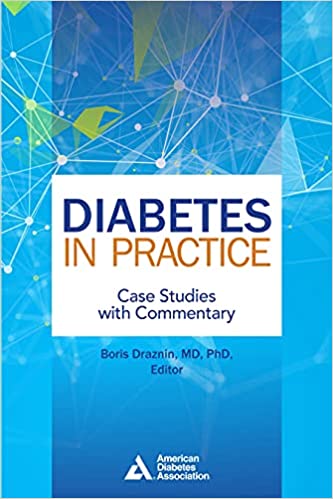
This one-of-a-kind resource presents challenging clinical scenarios through an impressive series of case studies. Gain practical tips and build your critical thinking skills via thought-provoking discussions from leading diabetologists. Features:
This course is CDR-approved for 18 CPEUs for RD/RDNs and DTR/NDTRs, and CBDCE-approved for 18 CEUs for CDCESs. Please note course expiration date below.
CPEU/CEU: 18
Course Expiration Date: 11/13/2026. You have until that date to complete your CPEU Evaluation or Webinar Feedback Survey for this course.
Learn more about course expiration dates.
The CDR Activity Number for this course is: 179640
Diabetes in Practice: Case Studies with Commentary CE Course
Course Type: 720—Preapproved Self-Study Materials, Printed.
Includes CE Evaluation/Reporting Form: You will submit it online and receive your CE Certificate immediately.
Suggested Learning Level: 2
Expand your knowledge of diabetes with a closer look at more complex case studies involving atypical diabetes, autoimmunity and diabetes, continuous glucose monitoring and insulin pumps, cancer, cystic fibrosis, and more! Gain insight into challenging diabetes clinical scenarios and expert analysis. This resource includes a collection of challenging and inspiring diabetes case studies and key lessons learned from leading worldwide diabetologists. Elevate your diabetes knowledge with this essential resource containing intriguing case studies and take-away lessons.
Features:
Discover useful clinical knowledge and practical tips through 49 case studies with commentary and analysis. Utilize the expert tips from diabetes practitioners to better understand diabetes assessment, diagnosis, and treatment challenges and approaches. Bring more value to your clients and patients with diabetes by broadening your knowledge of and expertise in various diabetes diagnoses and challenges. Boost your confidence when facing challenging cases in your practice. Diabetes in Practice: Case Studies with Commentary CE course is one beyond compare that will enhance your diabetes practice!
Published 2021. 204 pages. 18 CPEU CE Course. See the PIs tab for suggested Performance Indicators.
Discover Skelly Skills’ other diabetes CE courses.
Learn more about editor Boris Draznin, MD, PhD.
CPEU/CEU: 18
NOTE: Course Expiration Date: 11/13/2026. You have until that date to complete your CPEU Evaluation or Webinar Feedback Survey for this course.
8.1.1 Interprets and applies evidence-based comparative standards for determining nutritional needs.
8.1.2 Applies knowledge of food and nutrition as well as the biological, physical and social sciences in practice.
8.1.5 Applies medical nutrition therapy in disease prevention and management.
8.2.1 Assesses the physical, social and cultural needs of the individual, group, community or population.
8.2.2 Applies knowledge of health determinants when planning, developing and implementing services, programs, meal plans and menus.
8.3.1 Maintains the knowledge and skill to manage a variety of disease states and clinical conditions.
8.3.3 Takes action to address deficiencies to enhance practice.
8.3.4 Enhances knowledge to foster career advancement.
8.3.5 Keeps abreast of changes in practice and within practice environments that affect the scope of practice.
8.3.6 Keeps abreast of current nutrition and dietetics knowledge and trends.
8.3.7 Integrates new knowledge and skills into practice.
9.2.1 Assesses the learning needs of the individual or target group.
9.4.6 Uses socially and culturally appropriate strategies in order to respect diverse cultures and values.
9.1.3 Identifies and analyzes factors that influence behavioral change.
9.4.2 Selects and uses appropriate content and teaching methods to meet individual and group needs.
8.3.6 Keeps abreast of current nutrition and dietetics knowledge and trends.
9.1.2 Identifies and works to minimize and overcome barriers to learning.
9.1.4 Evaluates factors that influence the learning process and skill building.
9.2.3 Applies educational theories and uses assessment results for the planning process and development of materials and teaching.
9.3.2 Develops and/or selects a variety of learning activities based on a plan of action and outcomes, and the needs of the individual, group, community and population.
9.4.1 Assesses current knowledge and skills of the individual, group, community and population.
9.4.4 Adjusts education plan to meet the needs of the individual, group and population.
9.4.5 Implements an individualized teaching plan in order to promote, maintain and enhance nutritional health and learning.
9.4.8 Evaluate the impact of the individual’s learning and new knowledge and skills.
9.2.4 Collaborates with learner(s) and colleagues to formulate specific, measurable and attainable objectives and goals.
1.3.1 Applies strategies that engage the customer in a collaborative approach.
1.3.9 Recognizes and incorporates knowledge of cultural and/or religious foods, practices and preparation.
12.4.2 Collaborates with community partners to implement programs based on the assessed needs, values, beliefs, limitations and strengths of the population.
1.3.5 Identifies and respects economic and socio-cultural factors when determining the goals and wants of the customer.
1.3.7 Recognizes the limits of his/her cultural knowledge, skill and abilities; asks for help when the need is beyond the personal sphere of competence.
2.1.5 Observe non-verbal cues and respond appropriately.
3.3.1 Educates the customer on the availability of nutrition services.
2.1.1 Assesses the communication needs of the individual, customer or population.
2.1.7 Delivers information and opinions in a respectful and professional manner.
10.2.1 Identifies and selects valid and reliable tools to conduct a comprehensive nutrition assessment.
10.2.5 Develop nutrition prescriptions to communicate required food and nutrient needs.
10.2.7 Prioritizes specific nutrition problem(s).
10.2.8 Establishes the plan of care, directly addressing the nutrition diagnosis in collaboration with the patient in defining the time, frequency and duration of the intervention.
10.2.9 In collaboration with the client and interdisciplinary team (including NDTRs), selects and implements current and evidence-based nutrition interventions and patient education.
10.4.1 Collects information related to the patient’s use of pharmacotherapy and dietary supplements.
10.4.2 Applies knowledge of pharmacotherapy and its effect on nutrient absorption, utilization and metabolism when developing and/or revising the plan of care.
10.4.3 Evaluates, educates and counsels on the interrelationship and impact of pharmacotherapy on nutrient absorption.
Only logged in customers who have purchased this product may leave a review.
CPEU/CEU: 40

CPEU/CEU: 29

CPEU/CEU: 26

CPEU/CEU: 21
Skelly Skills offers two types of Continuing Education (CE), also known as Continuing Professional Development (CPD). The two types of CDR-approved CE we offer are:
For each of these types of CE, we offer Continuing Professional Education Units (CPEUs — also called CEUs, clock hours, or CPD hours).
Our prior approved enduring CE courses all include a CE exam. This is important for some of you because you *may* be limited by the number of prior approved enduring (aka self-study) hours you can accumulate. For each course, you will need to complete the CE exam through our online testing system. It’s easy and you’ll get your CE Certificate of Completion as soon as you pass the course (or complete the Feedback Survey, in the case of our one-hour on-demand CE webinars).
Our live CE webinars include a Feedback Survey. Within 24 hours of the live webinar, we will send an email with the Assessment ID and Key ID to complete the Feedback Survey through our testing system. Once you complete that, you’ll immediately be able to print and/or download your CE Certificate of Completion (it will also be emailed to you).
Step 1: Visit Skelly Skills and choose the topic and book or other course type you want to study. The number of CPEUs/CEUs/CPD hours are shown on each product page. Note to international customers: You can change the display currency using the icons on the right of the page.
Step 2: Pay online—you’ll get virtual courses immediately or else you’ll receive the book in the mail along with the CE exam booklet (we call this a ‘CE Evaluation’). Note: for books that we publish in-house, we include the CE exam and testing info in the back of the book, not as a separate booklet.)
Step 3: Study the course content. Once you have finished, complete the online exam at our testing site using the Assessment ID and Key ID (password) provided to you in the CE Evaluation, or on the course webpage if you are completing an on-demand webinar or online course.
That’s it! Once you have passed your exam, you’ll receive a PDF certificate of completion which includes the number of CPEUs/CEUs/CPD hours.

Purchase your webinar and receive a link to the webinar immediately.
Watch your webinar and then submit the CE Feedback Survey form by the course expiration date.
After submitting your CE Feedback Survey, you will be able to download your CPEU/CEU certificate as a pdf and keep for your records.

We use cookies to ensure you get the best experience. By using our website or clicking "accept", you consent to cookies.
Ginger Wimberley, RD, LDN, CDCES, Nashville, TN, Insulin Pump Sales –
I enjoyed reading the case studies and think they will be helpful in my practice.
Amie Stephens, RDN, CDCES, Concord, NH –
I really liked the short case studies with commentary. This was a very helpful format, not too long, clear and to the point. It kept my interest through the entire book and the various cases presented provided in-depth analysis and information regarding conditions that I was not very familiar with. Some of the cases reinforced infromation I already knew but also had additional details that would help me make better and more thorough clinical decisions.
Elizabeth Whelan MSN, RN, BA, CDCES, Harrisonville, MO –
As diabetes becomes more complex in today’s world, the part on atypical diabetes was helpful regarding the explanation of the different types of diabetes, and the screening tools were helpful. I also found the hypoglycemia section very helpful, as I struggle to make other providers in our hospital understand the complexity and the dangers of hypoglycemia, especially related to the increase in gastric bypass surgery.